
The Jews’ Passage from Safety to Deliverance
Book of EstherThis flow traces how a chain of ordinary court events first prepares danger for the Jews and eventually turns imminent destruction into survival.
increasing Bearing strength in each event
 decreasing
Bearing strength in each eventdecreasingThe Royal Feast
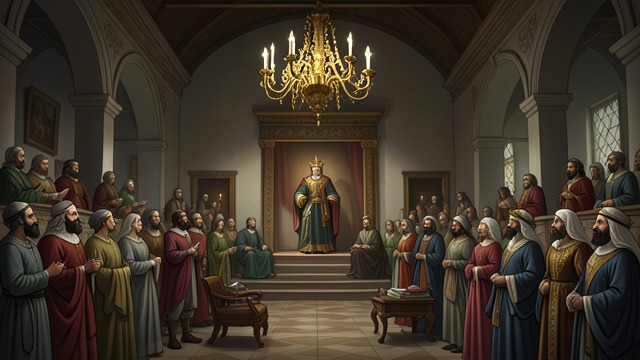
A Feast Begins the Chain
Courtly Occasion
The Feast of Ahasuerus appears at first to be an ordinary display of royal abundance, unrelated to the fate of the Jews. Carson treats its very ordinariness as the point: providential purpose can begin through worldly actions.
Latent Consequences
The gathering creates the setting for the king’s impulsive summons to Vashti. A social occasion becomes the first link in a sequence that will eventually place Esther near the throne.
Vashti’s Removal

The Queen Is Removed
Defiance and Judgment
Ahasuerus commands Vashti to appear before the assembled guests, and she refuses. The author regards both the command and the refusal as human acts with their own motives, while also seeing them as events that advance a larger providential design.
An Open Place
The counselors recommend that Vashti lose her queenship, and Ahasuerus accepts their advice. Her removal creates the vacancy through which Esther can later rise.
Esther’s Elevation
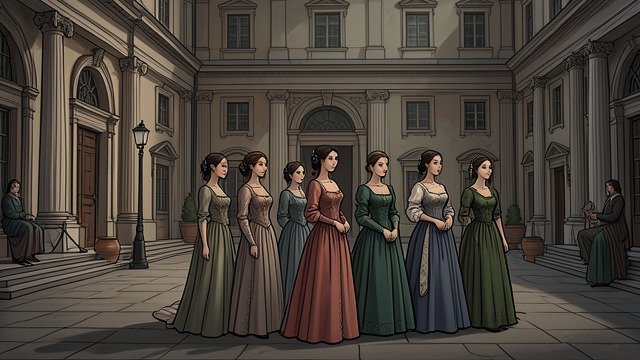
Esther Enters the Palace
A Captive Among Candidates
Esther, a Jewish orphan raised by Mordecai, is gathered with other young women at the palace. Her beauty and the favor she receives from the keeper of the women carry her toward the king.
A Contested Promotion
Ahasuerus prefers Esther and makes her queen. Carson emphasizes the providential usefulness of her beauty while condemning the coercive, morally compromised process through which the royal household selects her.
The Threat Takes Shape
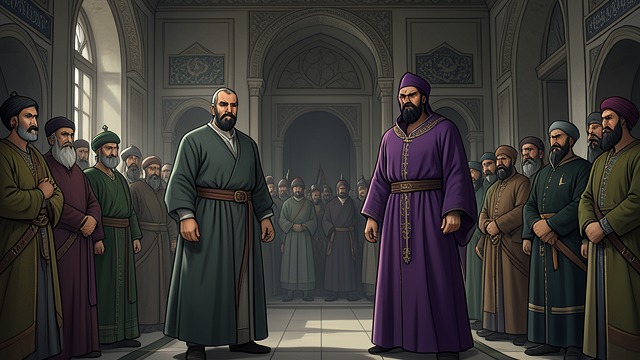
A Court Offense Becomes a National Threat
Mordecai’s Refusal
Ahasuerus elevates Haman and orders the court to honor him. Mordecai refuses to bow, an action Carson judges mistaken rather than a duty required by Jewish law.
Collective Peril
Haman turns his anger against Mordecai into a plan to destroy the Jews. The royal decree transforms a personal court conflict into a threat against a dispersed people across the Persian Empire.
A Reversal at the Court
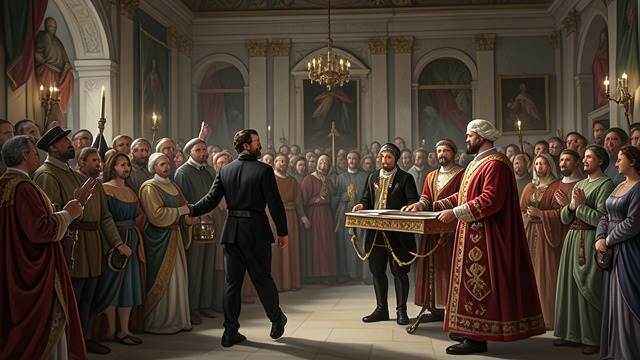
Danger Reverses Direction
The Unremembered Service
The king cannot sleep, hears the royal chronicles, and discovers that Mordecai’s earlier service went unrewarded. Haman arrives intending to secure Mordecai’s death but is made to lead the honors bestowed on him.
Survival and Public Vindication
Esther’s appeal leads to Haman’s execution and a new decree allowing the Jews to defend themselves. Their attackers are defeated, and the community escapes the threatened extermination.
Before Vashti’s deposition
At the close of the royal feast
After Vashti’s deposition
After Esther becomes queen
From the night before Haman’s planned execution of Mordecai through the Jews’ defense
